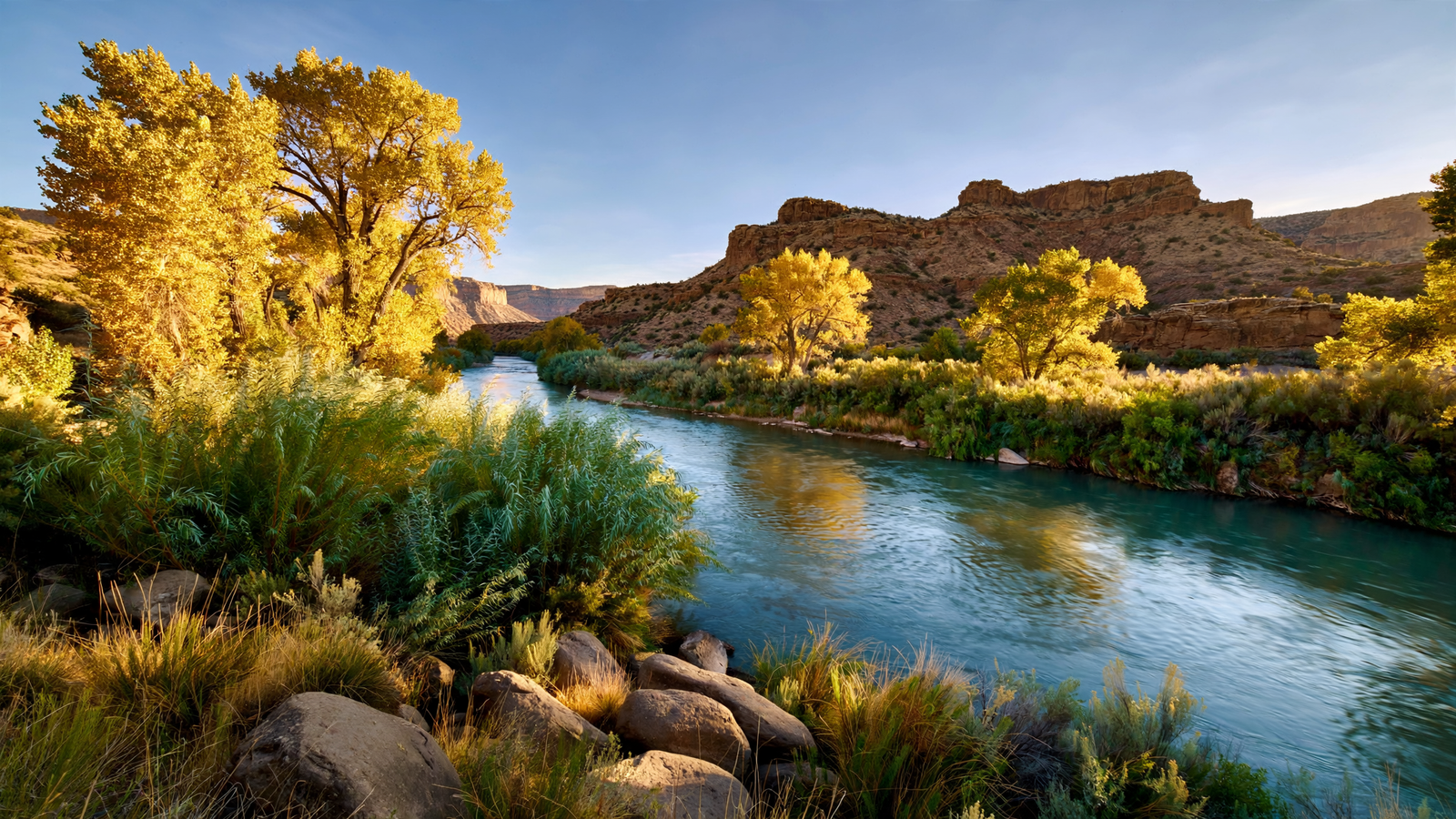
In the Verde Valley, the landscape can change quickly. Dry slopes and open desert give way to a ribbon of shade beside the Verde River, where cottonwoods and willows line the banks and water draws wildlife into the valley. Near Cottonwood, the Verde River Greenway State Natural Area protects part of this river corridor, offering a quieter way to encounter a region often associated with red-rock scenery and historic towns.
The greenway is more than a scenic place to stop. It is part of a connected natural system: the river, its banks, nearby wetlands and the communities that depend on water from the Verde watershed. Its value is easiest to see at ground level, where the contrast between river habitat and the drier surrounding country becomes unmistakable.
A different side of the Verde Valley
The Verde River is one of Arizona’s major perennial rivers, though its flow varies with season, weather and water use. Its corridor supports plant and animal life that would be scarce in the surrounding arid landscape. Cottonwoods and willows provide shade and nesting habitat; the river and its banks also serve as a route through the valley for wildlife.
That makes a visit feel distinct from a walk through open desert. The river’s edge is a place to slow down and notice details: the cooler air beneath trees, the sound of moving water where conditions allow, and birds moving between branches and open patches of bank. The experience changes with season and river conditions, so visitors should check current park information before setting out.
The Greenway sits near Cottonwood, a town whose history and present-day life are closely tied to the Verde Valley. Nearby, Dead Horse Ranch State Park provides a broader base for exploring the area, with its own recreation opportunities. The Greenway, by contrast, puts the river corridor itself in focus. It helps make visible what can be easy to overlook when driving through the valley: a narrow band of habitat with importance extending well beyond its immediate banks.
Why the river’s edges matter
Healthy river corridors do several jobs at once. They support native vegetation and wildlife, help connect habitats, and provide places where water and land meet. In a dry region, those functions are especially important. But a river landscape is not protected simply because it looks green. Its health is influenced by flows, water quality, land use and the condition of the surrounding watershed.
That is why conservation work along the Verde involves more than managing a single viewpoint or trail. Government agencies and conservation organizations work across different parts of the watershed, while local residents, landowners and visitors also shape how the river is treated. The challenges are not unique to this valley: communities throughout the Southwest must balance water needs with the ecological functions that rivers provide.
The Greenway offers a practical reminder of that balance. It gives people a chance to experience a riverbank as habitat, rather than just as a backdrop. Seeing the shade trees, wetland areas and wildlife associated with the river can make the idea of watershed stewardship more concrete. It also helps explain why protecting river corridors is a long-term responsibility, not a one-time project.
A place to explore with care
Visitors can help protect the area by following posted rules, staying on designated routes where provided, packing out litter and avoiding disturbance to wildlife. Conditions can vary, and access or permitted activities may change; Arizona State Parks’ official information is the best place to confirm what is available before a visit. Respect for the river matters beyond the park boundary, too, because the Verde is part of a larger watershed shared by people and wildlife.
For travelers exploring Yavapai County, the Verde River Greenway offers a useful counterpoint to the region’s better-known historic and geological attractions. It is not a grand overlook or a dramatic landmark. Its appeal is more intimate: a chance to see how water supports life in a dry landscape, and how a protected stretch of river can keep that relationship in view.
The greenway’s significance, then, lies both in what it conserves and in what it helps people notice. Along the Verde, Arizona’s riparian world is close enough to experience directly—and fragile enough to deserve attention.