On the California coast, where the Pacific meets a chain of rugged islands, a small fox has become a large conservation story.
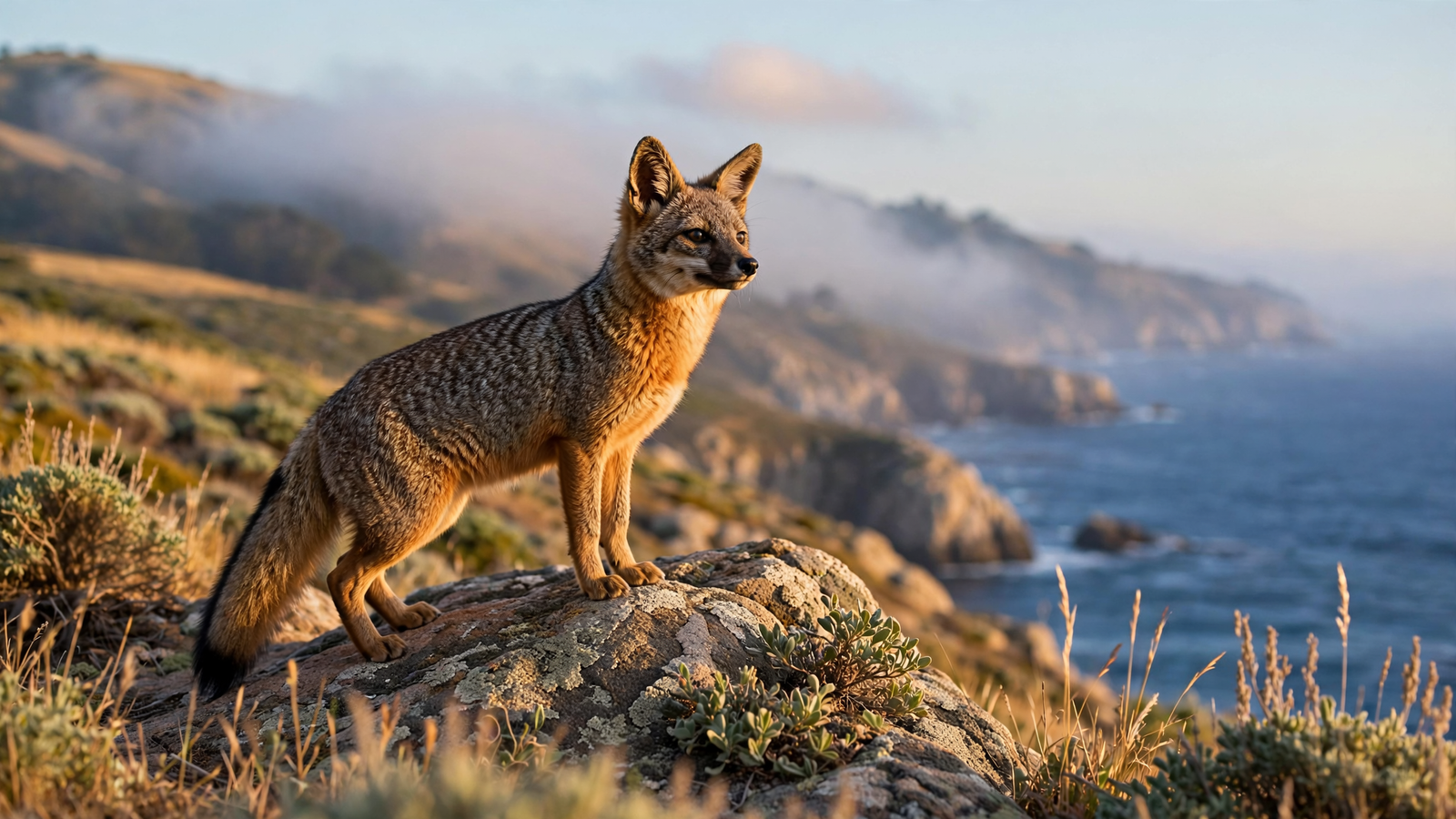
The island fox is found nowhere else on Earth. It is a compact relative of the mainland gray fox, shaped by thousands of years of life on six of the eight northern Channel Islands. Each island population developed its own character, and each became closely tied to the health of its island ecosystem.
By the late twentieth century, however, several island fox populations were collapsing. On some islands, the animals disappeared almost entirely. The decline was not caused by one simple problem. It emerged from a chain of ecological changes: introduced animals altered the landscape, bald eagles were displaced, golden eagles moved in, and canine diseases threatened the remaining foxes.
The recovery that followed required more than returning foxes to the wild. Scientists, park managers, ranchers, zoos, and conservation groups had to repair parts of an island food web and protect the foxes while their numbers were rebuilt. The result is one of the clearest examples in the United States of endangered-species recovery working at the scale of an entire ecosystem.
A fox made for island life
Island foxes are smaller than mainland gray foxes, a common pattern among mammals that evolve on islands with fewer predators and limited resources. Adults generally weigh only a few pounds. Their short legs, gray-and-rust fur, and dark markings give them a look that is familiar and unusual at the same time.
They are omnivores, eating insects, fruit, birds, small mammals, reptiles, and other available foods. Because each island is different, the foxes have also developed distinct subspecies. The fox living on Santa Cruz Island is not simply a population of the fox living on San Miguel Island; each represents a separate evolutionary story.
For much of the twentieth century, those stories appeared secure. Island foxes had survived human settlement, ranching, and other changes to the islands. Then a series of disruptions began to reinforce one another. For related reading, see The Bald Eagle: How America’s National Bird Found Its Way Back.
When the food web changed
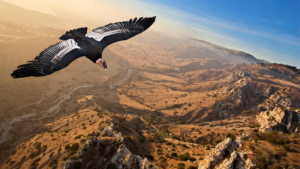
One of the most important changes involved the islands’ bald eagles and golden eagles. Bald eagles had historically nested on the Channel Islands, but chemical pollution and the pesticide DDT severely damaged their reproduction in the mid-twentieth century. As bald eagles declined, golden eagles began using the islands more frequently.
Golden eagles were not native breeding residents of the northern Channel Islands in the same way. They were drawn by a new supply of prey, especially feral pigs introduced to Santa Cruz Island. The pigs created conditions that helped golden eagles establish themselves, while the eagles preyed on island foxes.
The danger was especially severe on Santa Cruz, Santa Rosa, and San Miguel islands. On San Miguel Island, the fox population fell to only a handful of animals. The San Miguel Island fox became one of the most imperiled mammals in North America.
Another threat appeared on Santa Catalina Island, where canine distemper virus caused a serious decline. The disease could spread from domestic dogs, making vaccination and disease prevention central parts of the recovery effort there.
Conservation became a race against time
In the 1990s, biologists began moving some of the remaining foxes into protective care. This was not intended to create a permanent zoo population. The goal was to preserve the animals’ genetic diversity and produce enough healthy foxes to return them to their islands.
The captive-breeding program required careful pairing. A population reduced to a few dozen animals can lose genetic variation quickly, so conservationists tracked family lines and selected breeding pairs to avoid inbreeding. The work also included veterinary care, behavioral monitoring, and preparation for life in the wild.
At the same time, managers addressed the larger causes of the decline. On Santa Cruz Island, the Nature Conservancy and National Park Service worked with other partners to remove feral pigs. Golden eagles were captured and relocated from the northern islands, while bald eagles were encouraged to return through a restoration program. For related reading, see National Ignition Facility: How a California Laser Made Fusion Ignition Real.
These actions were connected. Removing golden eagles could reduce immediate pressure on foxes, but restoring bald eagles helped reestablish the historic ecological balance. Once bald eagles returned, they occupied nesting territories and helped limit the conditions that had allowed golden eagles to expand.
The approach reflected a basic lesson in conservation: saving an endangered animal often means changing the system around it, not simply increasing the animal’s head count.
Returning foxes to the islands
As the islands became safer, captive-bred foxes and foxes held in protective facilities were gradually released. Biologists monitored them with radio collars and other field methods, watching to see whether they found food, established territories, reproduced, and survived.
Releases were planned carefully because each island population had its own genetic identity. Moving an animal from one island to another could undermine the very differences conservationists were trying to preserve. The recovery therefore involved several separate populations rather than one blended island fox population.
On Santa Cruz Island, restoration of the landscape and the fox population advanced together. On San Miguel and Santa Rosa, the return of foxes depended on removing or reducing the threats that had driven them down. On Santa Catalina, vaccination became a major tool for protecting foxes from canine distemper.
The work took years. Some animals had to remain in captivity longer than expected. Some releases required repeated monitoring and adjustment. Recovery was not a single event but a sequence of decisions made across islands with different conditions.
A rare conservation success
The results were strong enough to change the island fox’s legal status. Four subspecies were removed from the federal endangered species list in 2004. The San Miguel Island, Santa Rosa Island, and Santa Cruz Island subspecies remained protected while their populations continued to recover, and those final three were delisted in 2016. For related reading, see The European Bison: How Europe’s Largest Land Mammal Found Its Way Home.
That milestone did not mean the foxes no longer needed attention. Delisting transfers conservation into a different phase, one focused on long-term monitoring and preventing a return to crisis. Small island populations can be vulnerable to disease, drought, wildfire, introduced predators, and sudden changes in food availability.
The animals are also part of a larger public landscape. Channel Islands National Park and surrounding conservation areas protect not only foxes but seabird colonies, kelp forests, rare plants, archaeological sites, and cultural landscapes connected to the Chumash people. The fox’s recovery is therefore not an isolated wildlife project. It is part of a broader effort to keep the islands functioning as living places.
What the island fox teaches
The island fox story is hopeful because it shows that endangered-species recovery can succeed even after a population has fallen to a dangerous low. But its deeper lesson is about patience and connection.
Captive breeding mattered, yet breeding alone would not have been enough. Eagle management mattered, yet predators were only one part of the problem. Disease prevention mattered, yet vaccines could not restore a damaged food web. The fox returned because many separate actions were made to support one another.
That kind of work rarely produces a dramatic single moment. It looks more like years of monitoring, carefully planned releases, habitat restoration, veterinary checks, and cooperation among institutions that do not always share the same mission. Its success is visible in a simpler image: a small wild fox moving through island grassland where, not long ago, almost none remained.
The island fox is still an island animal, with all the vulnerability that implies. But its recovery has given California’s Channel Islands something more than a rescued species. It has given scientists and the public a working example of ecological repair—one in which protecting a single distinctive animal helped bring an entire landscape closer to balance.
Use: Background on island fox biology, habitat, threats, and recovery in Channel Islands National Park.
Use: Federal conservation status, recovery history, and information on the island fox subspecies.
Use: Context on ecosystem restoration, feral-pig removal, and the collaborative recovery effort on the Channel Islands.