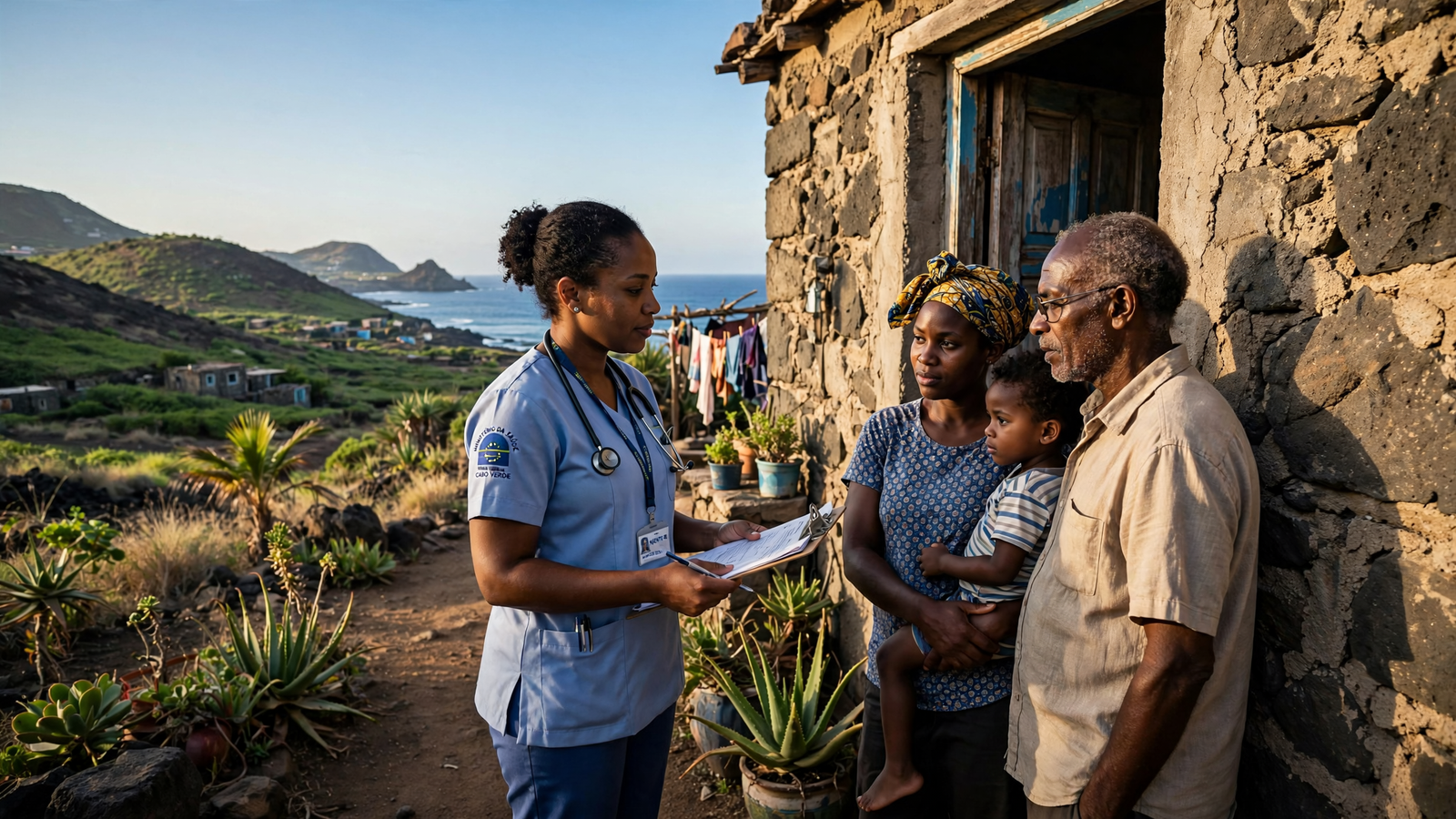
On the Atlantic islands of Cabo Verde, a major public-health achievement has arrived quietly: the country has been certified malaria-free by the World Health Organization.
The certification, announced in January 2024, recognizes that Cabo Verde has stopped ongoing local transmission of malaria and demonstrated that its health system can detect and prevent the disease from returning. It is the third country in the WHO African Region to receive the designation, after Mauritius and Algeria.
A milestone built over decades
Malaria is caused by parasites transmitted through the bites of infected mosquitoes. Although it is preventable and treatable, it remains a serious global health challenge, especially in tropical and subtropical regions. The WHO estimates that hundreds of millions of malaria cases still occur worldwide each year. For related reading, see Luxembourg Made Everyday Travel Free—and Turned a Commute Into a Public Service.
Cabo Verde’s success did not come from one single invention or campaign. It grew from a long-term strategy that combined mosquito control, early diagnosis, access to treatment and careful monitoring of suspected cases.
The island nation had already made important progress by reducing malaria transmission in the 1960s. But eliminating the disease required continued work, including stronger surveillance and a rapid response to cases arriving from countries where malaria remains present.
According to the WHO, Cabo Verde has had no indigenous malaria cases since 2017. That sustained period without local transmission allowed the country to apply for certification. WHO experts then assessed its surveillance systems, laboratories, treatment services and ability to respond if malaria were reintroduced. For related reading, see Annie Dodge Wauneka: How an Arizona Health Advocate Turned Navajo Knowledge Into Public Health.
Why certification matters
Being declared malaria-free does not mean that mosquitoes have disappeared or that imported cases are impossible. Travelers can still bring malaria into the country, and the local mosquito species capable of transmitting the parasite remain an important reason for vigilance.
Instead, the certification confirms that malaria is no longer regularly spreading within Cabo Verde’s communities. The distinction is important: maintaining the achievement will depend on finding cases quickly, treating them effectively and investigating possible transmission before it can grow.
That makes Cabo Verde’s accomplishment both a celebration and a practical example. It shows how countries with limited resources can make progress against a complex disease when public-health systems are organized around prevention and persistence. For related reading, see Prescott’s Granite Dells Shows What a Public Landscape Can Become.
An achievement with a wider lesson
Cabo Verde is a small island nation, but its experience offers a lesson that reaches far beyond its shores. Disease elimination is rarely a single dramatic breakthrough. More often, it is the result of thousands of routine actions: a health worker recognizing symptoms, a laboratory confirming a diagnosis, a treatment reaching a patient and a surveillance team following up on a possible case.
The country’s malaria-free status also adds momentum to a broader African effort. Algeria became the first mainland country in the WHO African Region to receive certification in 2019, while Mauritius earned the designation in 1973. Each success demonstrates that malaria elimination is possible when national programs receive sustained support and remain prepared after cases decline.
Cabo Verde’s milestone is therefore more than a certificate. It is evidence that consistent public-health work can change the trajectory of a disease—and that progress, carefully protected, can become a lasting achievement.
Use: Primary source for the 2024 certification, Cabo Verde’s interruption of indigenous transmission and the regional context.
Use: Background on WHO’s malaria-free certification standards and verification process.
Use: Background on malaria transmission, prevention and its continuing global health significance.
World Health Organization — WHO certifies Cabo Verde as a malaria-free country — https://www.who.int/news/item/12-01-2024-who-certifies-cabo-verde-as-a-malaria-free-country — Primary source for the 2024 certification, Cabo Verde’s interruption of indigenous transmission and the regional context.
World Health Organization — Malaria elimination certification — https://www.who.int/teams/global-malaria-programme/elimination/certification — Background on WHO’s malaria-free certification standards and verification process.
World Health Organization — Malaria fact sheet — https://www.who.int/news-room/fact-sheets/detail/malaria — Background on malaria transmission, prevention and its continuing global health significance.