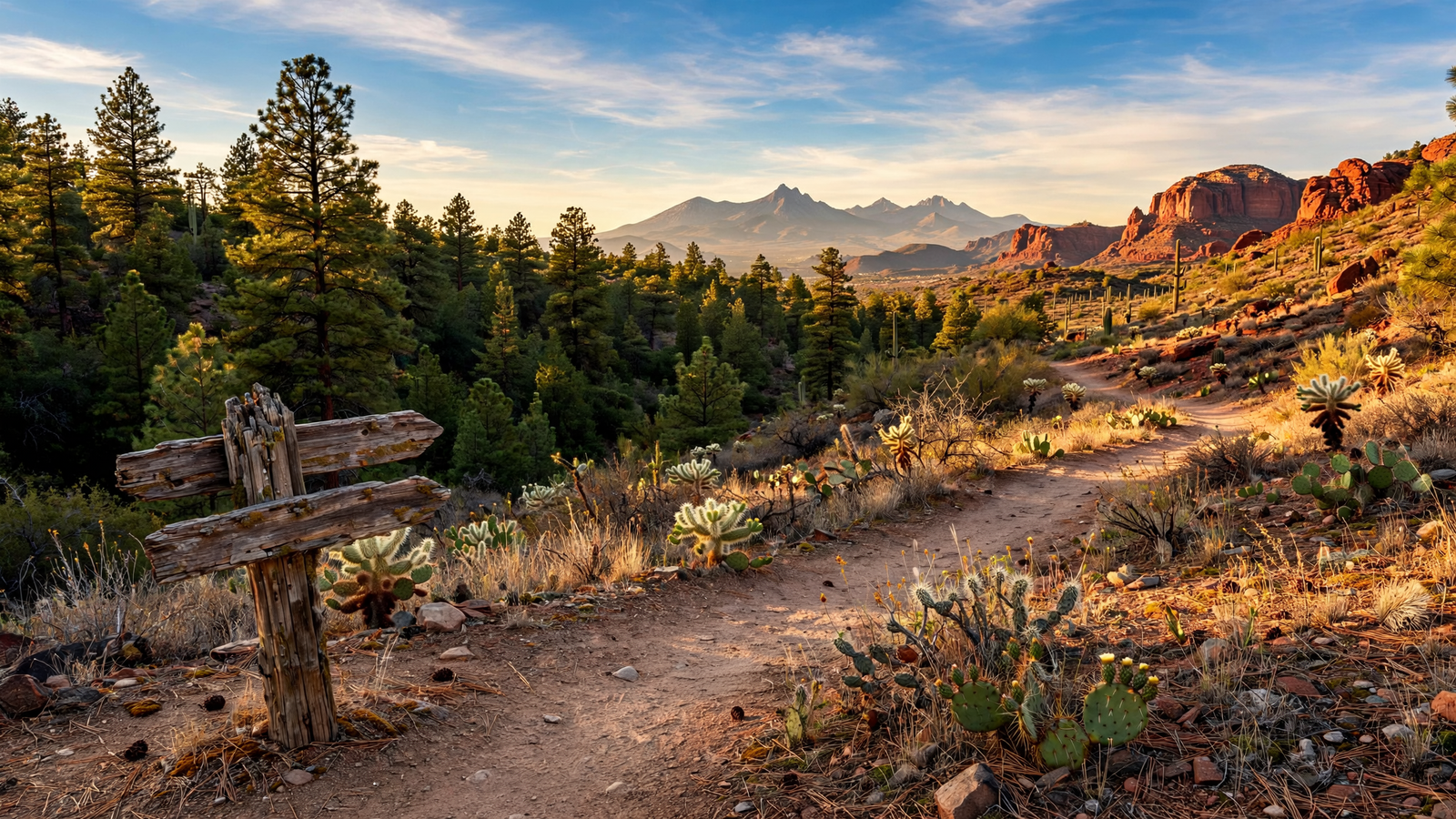
Across the American Southwest, geography often defines both retreat and routine. In Arizona, the physical transition between the arid expanse of the desert floor and the cooler, forested elevations of the northern plateau has drawn wanderers, naturalists, and weekend travelers for generations. Yet as public interest in outdoor spaces steadily swells, the mechanics of visiting those destinations—from national recognition down to day-use admission fees—continue to evolve. That range of experiences is part of what makes travel across the state distinctive: a journey may be shaped by elevation and landscape, but also by the choices available for reaching and enjoying public places. For visitors, understanding both the appeal of a destination and the way it is managed can help put an outing in context.
The Pull of Northern High Country
For many travelers navigating the state, the default itineraries frequently feature well-trodden corridors: the dramatic depths of the Grand Canyon, the sculpted red sandstone monoliths of Sedona, or the saguaro-studded foothills flanking Phoenix and Tucson. However, regional travelers and national destination observers have increasingly turned their focus toward Northern Arizona’s higher terrain, where mountain communities offer a sharp contrast to lowland heat. This contrast is not only a change in scenery; it also offers a different setting for outdoor recreation and a different pace from the familiar desert-focused trip. Northern Arizona therefore broadens the picture of what a visit to the state can include.
Flagstaff has earned notice among travel analysts as one of the country’s most overlooked destinations. Perched at an elevation of roughly 7,000 feet and framed by the San Francisco Peaks, the city provides an anchor for outdoor access that operates far outside typical desert stereotypes. Surrounded by dense stands of ponderosa pine, the area serves as an intersection where mountain trails, historic transportation routes, and scientific stargazing heritage converge. The combination gives the destination more than one point of interest: its setting connects recreation with the region’s natural and cultural context. For travelers, that mix can make Flagstaff a destination in its own right rather than simply a place associated with a route through Northern Arizona.
Rather than acting merely as a highway pass-through on the way to the Grand Canyon’s South Rim, the northern hub highlights a different tempo of recreation. Alpine hiking routes, cooler summer temperatures, and accessible public lands have elevated its standing among explorers seeking destinations that offer deep natural context without the concentrated congestion typical of high-profile resort communities. The appeal is therefore not limited to a single landmark or activity. It rests on the relationship between the mountain environment, the opportunities to explore it, and the relative contrast with more heavily recognized destinations. Travelers looking beyond the state’s most familiar stops can find in this high-country setting a distinct complement to a broader Arizona itinerary.
The Economics of Conservation: State Park Fees
While northern pinewoods continue to attract attention, the broader network of managed outdoor spaces across Arizona is confronting the practical realities of visitor traffic and operational overhead. Managing trails, preserving natural habitats, and maintaining public amenities across diverse ecosystems require consistent funding mechanisms, prompting adjustments to how public visits are financed. Those responsibilities are central to the experience of a park even when visitors primarily notice the landscape or facilities. The costs of keeping public places available and cared for form part of the wider relationship between recreation and stewardship.
Arizona State Parks and Trails has moved forward with fee restructuring affecting entrance, camping reservations, and specialty tour admissions across more than 30 parks throughout the state. Such adjustments reflect the broader pressures facing modern park systems nationwide, where escalating maintenance backlogs, trail wear, and facility demands require increased operational capital. Because the changes cover several kinds of visits, they can matter to people planning different types of outings, not only to visitors entering for the day. Looking at fees as part of park management helps explain why the cost of a visit can change alongside the needs of the places being maintained.
These fee changes touch a wide array of public acreage, ranging from desert botanical reserves and lake recreation zones to historical preserves and rugged backcountry paths. For regular campers and day hikers, the price shifts represent a tangible change in how excursions are planned, balancing the individual cost of exploration against the shared expense of stewardship and long-term land management. The practical effect is that visitors may need to consider admission, reservations, or tour costs when choosing among destinations and activities. At the same time, the broader purpose of managed fees remains connected to supporting the public spaces that make those visits possible. The question for travelers is how to match their plans with both the type of experience they want and the costs attached to it.
Mapping No-Cost Exploration Across Arizona
Despite rising costs associated with formalized state parks, access to the broader landscape does not remain exclusively behind an admission checkpoint. A substantial counter-current of travel across Arizona relies on public spaces that remain entirely free to explore, offering pathways for budget-conscious families, solo travelers, and regional residents. These places provide another way to experience the state’s varied landscapes and landmarks, and they make clear that park-fee changes do not define every outdoor or cultural outing. For people building a trip around cost as well as interest, identifying no-cost options can be part of the planning process rather than an afterthought.
Scattered across both metropolitan centers and remote rural valleys, dozens of sites provide open access without entry fees. These locations encompass an eclectic mix of natural and cultural landmarks, including:
- Public nature preserves and urban mountain trailheads that safeguard native Sonoran flora.
- Historic downtown districts and scenic highway viewpoints highlighting territorial architecture and historic rail corridors.
- Riparian restoration corridors, wetland habitats, and community gardens operated under municipal or non-profit stewardship.
- Public desert reserves where open-air walking paths allow self-guided study of indigenous vegetation and wildlife.
The variety in this list also broadens the meaning of exploration. A visit need not center on a single formal park or one kind of landscape: urban trailheads, cultural districts, wetlands, and desert paths each offer a different way to encounter Arizona. Their settings and purposes differ, but together they provide options for visitors whose interests, budgets, or itineraries may not align with fee-supported parks. Open access does not erase the role of stewardship; some of these places are operated under municipal or non-profit care, while others preserve natural or cultural features for public enjoyment.
By balancing fee-supported reserves with no-cost regional sites, Arizona maintains a varied spectrum of outdoor opportunities. For visitors and residents alike, charting a journey through the state remains an exercise in discovering how natural history, geographic variety, and stewardship priorities intersect across every elevation. Northern high country, managed state parks, and freely accessible public spaces each contribute a different part of that experience. Considering them together allows travelers to see the state’s recreation not as a choice between a single famous destination and nowhere else, but as a range of settings and approaches to public access. The landscape remains the central attraction, while planning determines how people engage with it.
Use: Supports details regarding Flagstaff being recognized as one of the most underrated travel destinations in the United States.
Use: Supports facts on Arizona State Parks and Trails fee increases impacting entrance, camping, and tours across more than 30 state parks.
Use: Supports context regarding the availability of dozens of free destinations and public sites to visit across Arizona.