Roads Change More Than Travel
America’s modern highway system changed the country as dramatically as railroads had changed the nineteenth century. Faster roads made it easier for families to travel, for businesses to move goods, and for communities to grow beyond their traditional boundaries. For related reading, see The Interstate Highway System: How America Built a New Kind of Road.
From Local Roads to a National Network
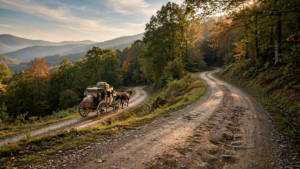
Before the interstate era, long-distance driving depended on a patchwork of local roads and highways. The interstate system brought a new idea: a connected network designed for high-speed travel between regions. Begun during the Eisenhower administration, it became one of the largest public-works projects in American history.
A New American Landscape
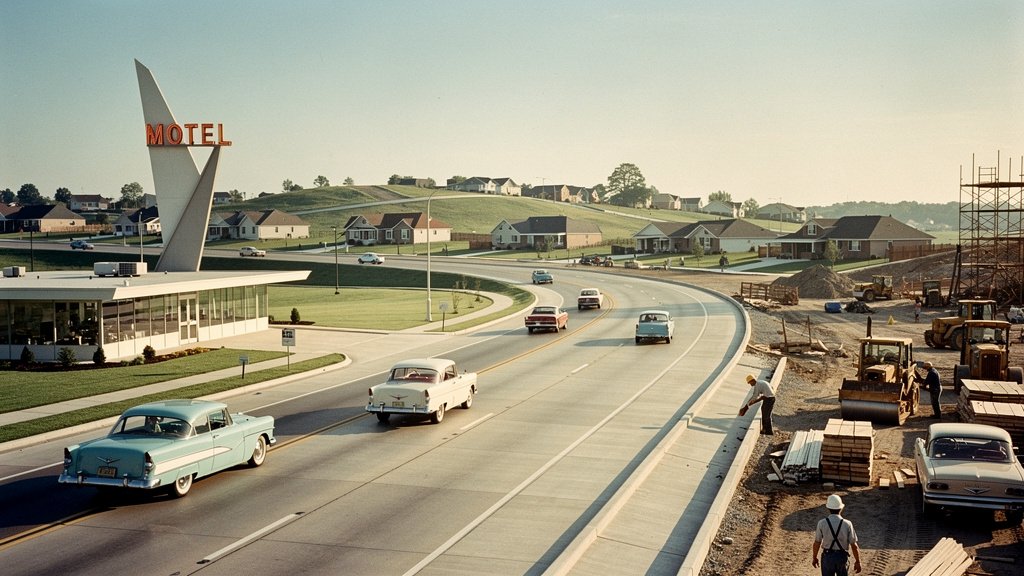
Interstates encouraged suburbs, shopping centers, motels and roadside businesses. They also changed older downtowns and sometimes divided established neighborhoods. The highway is therefore more than pavement—it is part of the story of how modern America was built.
Sources & Rights
- Federal Highway Administration — History of the Eisenhower Interstate System — https://www.fhwa.dot.gov/interstate-70th/history_eisenhower_interstate_system.cfm
Use: History of the 1956 Federal-Aid Highway Act and the Interstate program. - Federal Highway Administration — The Greatest Decade 1956-1966 — https://www.fhwa.dot.gov/infrastructure/50interstate.cfm
Use: Development and scale of the Interstate Highway System. - Federal Highway Administration — Interstate System Design — https://www.fhwa.dot.gov/programadmin/interstate.cfm
Use: Federal design standards and funding structure.
Rights: Sources are used for research and factual verification. Article text is original and not reproduced from the sources.